
2026-10-07 · Water Heater Vista
How to Flush Sediment from Your Water Heater in Los Angeles 90065
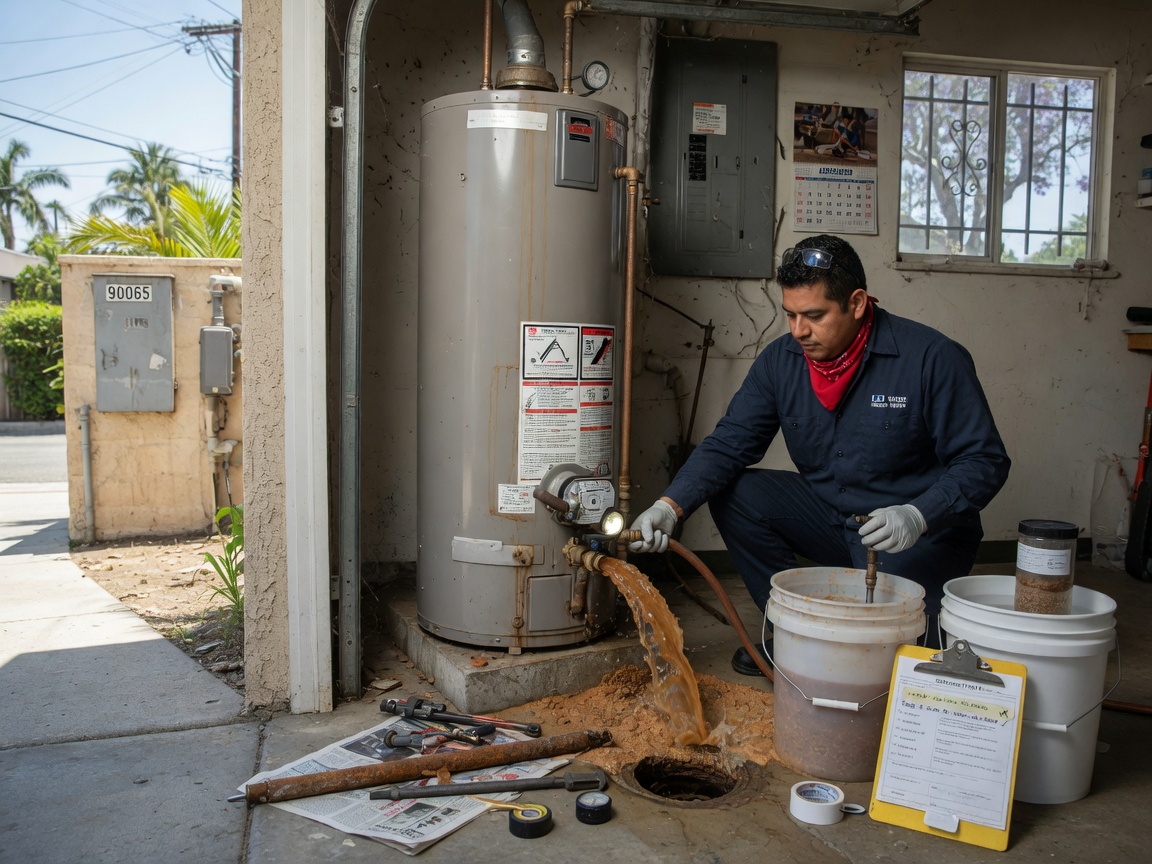
You flush a tank water heater by shutting off its power or gas and the cold water supply, connecting a garden hose to the drain valve, and draining the tank until the water runs clear. Many manufacturers suggest doing this about once a year, and sooner if you hear rumbling or popping. The job usually takes an hour or two, plus time for the tank to reheat afterward.
Why sediment builds up
Los Angeles water is commonly described as hard, meaning it carries dissolved calcium and magnesium. When water is heated, some of those minerals settle out as a layer at the bottom of the tank. That layer insulates the water from the burner or the lower element, so the heater works harder, noise increases and heating elements or tank bottoms wear faster. Check your local water report for hardness figures.
Signs you should flush now
- Rumbling or popping while the heater runs, since trapped water boils under the sediment layer. See water heater making noise.
- Less hot water than before, or water that runs lukewarm; see water heater not staying hot.
- Cloudy or gritty hot water.
- A heater that has never been flushed and is several years old.
What you need
A garden hose long enough to reach a floor drain or the yard, a bucket, work gloves and a screwdriver or wrench for the drain valve. Check the drain valve first: plastic valves on old tanks can break, so if yours looks brittle, have a pro handle it.
Safety first
Turn off the power at the breaker (electric) or set the gas control to pilot or off (gas) before draining, otherwise an element can burn out in an empty tank. The water that comes out will be hot enough to scald, so route the hose carefully and keep children and pets away.
Step by step
- Turn off the breaker or gas control as above.
- Close the cold water inlet valve at the top of the heater.
- Open a hot water tap in the house so air can enter and the tank can drain.
- Attach the hose to the drain valve near the bottom and run it to a drain or outdoors.
- Open the drain valve and let the tank empty. Expect cloudy water and flakes at first.
- Briefly open the cold inlet again to stir up remaining sediment, then close it, repeating a few times until the water runs clear.
- Close the drain valve, remove the hose, and reopen the cold inlet with the hot tap still open.
- When water runs steadily from the hot tap with no air sputtering, close the tap.
- Restore the breaker or gas control. Never power an electric heater until the tank is full.
If the water will not run clear
Heavy sediment can clog the drain valve. If water slows to a trickle, stop and call a technician rather than forcing it. Hard scale that never clears is a sign the tank may be near the end of its life, and our cost guide explains how to decide between repair and replacement.
After the flush
Check the drain valve for drips, watch the relief valve and connections for leaks, and note how the heater sounds. If noise returns quickly, sediment may be heavier than a single flush can handle. Pair the flush with an anode rod check; see our anode rod guide.
When to call a pro
Call a technician if the drain valve leaks or will not open, the tank is old and corroded, you smell gas, or you are uncomfortable working near gas or 240V power. Homes in Cypress Park and nearby often have heaters in tight garages or closets, so mention access when you request a callback.